
Exploring the Technologies Transforming Modern Scientific Research
Scientific research is constantly evolving through advances in biotechnology, molecular biology, analytical chemistry, and laboratory instrumentation. New technologies are changing how scientists investigate biological systems, analyze complex samples, and develop innovative solutions to scientific challenges.
Modern laboratories increasingly rely on advanced analytical methods, automated systems, and integrated research technologies to improve experimental processes and obtain more reliable results.
From genetic investigations to cellular analysis and pharmaceutical research, scientific innovation continues to expand the possibilities of laboratory research.
Understanding these developments is essential for researchers, laboratory professionals, biotechnology specialists, and scientific institutions seeking to remain informed about emerging technologies and their applications.
1. The Evolution of Modern Laboratory Technologies
Laboratory technologies have undergone significant transformations over recent decades. Traditional experimental procedures are increasingly complemented by advanced instruments, automated systems, and digital analytical platforms.
These developments have improved the way researchers prepare samples, perform experiments, collect measurements, and interpret scientific data.
Modern laboratory technologies increasingly focus on:
Improving analytical precision and measurement accuracy.
Reducing repetitive manual operations.
Supporting more efficient experimental workflows.
Increasing the capacity for sample processing.
Improving data acquisition and documentation.
Facilitating collaboration between different research disciplines.
The integration of these technologies allows laboratories to address increasingly complex scientific questions while adapting to evolving research requirements.
2. Advances in Molecular Biology and Genetic Research
Molecular biology remains one of the most dynamic areas of scientific research. Developments in genetic analysis, molecular characterization, and gene expression studies have expanded our understanding of biological processes.
Researchers can now investigate genetic material with greater sensitivity and explore how changes in gene activity influence cellular functions and biological mechanisms.
Important technological developments include:
Advanced Genetic Sequencing
Modern sequencing technologies allow researchers to investigate genetic information on a large scale. These methods provide valuable insights into genetic variation, biological diversity, and molecular mechanisms.
Gene Expression Analysis
Gene expression technologies help scientists investigate how genes are activated or suppressed under different experimental conditions.
These approaches are particularly useful in studying cellular responses, biological pathways, and molecular changes associated with different physiological conditions.
Molecular Detection Technologies
Advanced molecular detection methods improve the identification and quantification of specific genetic targets.
They support applications in fundamental research, biotechnology development, infectious disease investigations, and molecular diagnostics research.
Together, these developments continue to transform genetic research and provide new opportunities for scientific discovery.
3. Innovations in Cell Biology and Cellular Analysis
Cell-based research is essential for understanding biological systems and investigating how cells respond to environmental, chemical, and biological factors.
Recent developments in cellular technologies have improved the ability to monitor cellular behavior, evaluate biological responses, and investigate complex cellular mechanisms.
Advanced Cell Culture Systems
Modern cell culture technologies provide controlled environments for studying cellular growth, differentiation, metabolism, and function.
Innovations in culture media, specialized growth surfaces, and controlled incubation systems help researchers establish experimental conditions suited to different cell models.

High-Content Cellular Analysis
High-content analysis combines automated microscopy with image processing to examine multiple cellular characteristics simultaneously.
Researchers can investigate cell morphology, protein localization, cellular activity, and changes in cellular organization.
Advanced Cell Viability and Cytotoxicity Testing
Cell viability and cytotoxicity assays are widely used to investigate the effects of different compounds and experimental conditions on cellular health.
Modern detection technologies include colorimetric, fluorometric, and luminescence-based methods, providing different approaches for measuring cellular responses.
These innovations contribute to more comprehensive cellular investigations and support research in biotechnology, toxicology, and pharmaceutical sciences.
4. The Growing Importance of Biotechnology
Biotechnology combines biological knowledge with technological applications to develop products, processes, and solutions for scientific and industrial challenges.
It plays an increasingly important role in pharmaceutical development, healthcare research, agriculture, environmental science, and industrial manufacturing.
Several areas are driving innovation in modern biotechnology.
Biopharmaceutical Development
Advances in biotechnology have transformed the development of biological medicines, therapeutic proteins, antibodies, and other complex biological products.
Laboratory technologies support the investigation, production, purification, and characterization of these molecules.
Recombinant Protein Technology
Recombinant protein production allows researchers to produce specific proteins using genetically modified biological systems.
These technologies are widely used in research, pharmaceutical development, and industrial biotechnology.
Industrial Biotechnology
Industrial biotechnology applies biological systems and processes to the production of useful compounds and materials.
Applications include enzyme production, microbial fermentation, biological manufacturing, and the development of more sustainable industrial processes.
Environmental Biotechnology
Environmental biotechnology uses microorganisms, enzymes, and biological processes to investigate environmental challenges.
Research applications include wastewater treatment, biodegradation, environmental monitoring, and the development of sustainable biological solutions.
5. Advanced Analytical Technologies in Scientific Research
Analytical technologies are fundamental to modern scientific investigations because they allow researchers to identify, separate, quantify, and characterize complex samples.
Technological developments in analytical instrumentation have improved sensitivity, detection capabilities, and the efficiency of laboratory measurements.
Chromatographic Analysis
Chromatographic techniques are widely used to separate chemical compounds within complex mixtures.
High-performance liquid chromatography and gas chromatography are important analytical approaches in pharmaceutical research, biochemical investigations, environmental analysis, and chemical characterization.
Mass Spectrometry
Mass spectrometry provides detailed information about the molecular composition of biological and chemical samples.
It is widely applied in protein characterization, metabolite identification, molecular profiling, and pharmaceutical analysis.

Spectroscopic Methods
Spectroscopic technologies investigate how molecules interact with electromagnetic radiation.
Ultraviolet-visible spectroscopy, infrared spectroscopy, fluorescence spectroscopy, and Raman spectroscopy provide complementary approaches for studying molecular structures and chemical properties.
The combination of these analytical technologies allows researchers to obtain more detailed information about complex scientific samples.
6. Laboratory Automation and the Future of Experimental Research
Automation is becoming an important component of modern laboratory environments.
Automated instruments and robotic systems can perform repetitive procedures with consistent operating parameters, helping researchers organize experimental workflows and manage larger numbers of samples.
Common applications include:
Automated liquid handling.
Robotic sample preparation.
Microplate dispensing.
Automated cell imaging.
High-throughput screening.
Automated analytical measurements.
Digital laboratory documentation.
Laboratory automation can help reduce repetitive manual tasks and support standardized experimental procedures.
However, successful automation requires appropriate equipment selection, method optimization, instrument maintenance, and quality assessment.
The combination of automated technologies and scientific expertise is helping laboratories develop more efficient experimental strategies.
7. Artificial Intelligence and Digital Transformation in Research
Artificial intelligence and digital technologies are creating new opportunities for scientific investigation.
Researchers are increasingly exploring computational approaches to process complex datasets, recognize patterns, analyze images, and support scientific decision-making.
Artificial Intelligence in Image Analysis
Artificial intelligence-based image analysis can assist researchers in identifying cellular structures, measuring morphological changes, and analyzing microscopy images.
These applications are particularly relevant to cell biology, histology, and biomedical research.
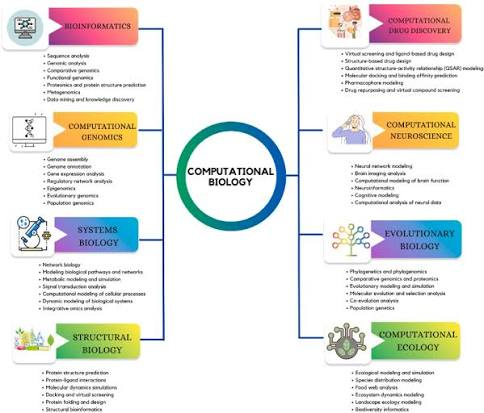
Computational Biology
Computational biology combines biological knowledge with mathematical and computational methods to investigate complex biological systems.
It supports applications such as genetic data analysis, protein structure prediction, molecular modeling, and biological network investigations.
Digital Laboratory Management
Digital laboratory platforms facilitate the organization of experimental information, sample tracking, and scientific documentation.
They can improve data accessibility, traceability, and coordination between laboratory activities.
As these technologies continue to develop, their integration with conventional experimental methods is expected to play an increasingly important role in scientific research.
8. Quality, Reproducibility, and Reliability in Scientific Research
Technological innovation must be accompanied by appropriate quality practices to ensure that experimental findings are scientifically meaningful.
Reproducibility remains a major consideration across biological, chemical, and pharmaceutical research.
Several factors contribute to reliable laboratory results:
Appropriate experimental design.
Standardized sample preparation.
Suitable positive and negative controls.
Instrument calibration and maintenance.
Validated analytical methods.
Consistent experimental conditions.
Accurate scientific documentation.
Appropriate statistical analysis.
Modern laboratory technologies can support these objectives by improving measurement consistency, facilitating data collection, and helping researchers standardize experimental procedures.
Nevertheless, reliable results also depend on scientific expertise, careful interpretation, and appropriate methodological choices.
9. Emerging Trends Shaping the Future of Biotechnology
The future of biotechnology will be influenced by the convergence of several scientific and technological developments.
Some of the most promising research directions include:
Precision Medicine
Advances in molecular biology and genetic analysis are supporting research into more individualized approaches to understanding diseases and evaluating therapeutic strategies.
Advanced Cell Models
Three-dimensional cell culture systems, organoids, and advanced cellular models are providing new opportunities to investigate biological processes under more complex experimental conditions.
Personalized Biological Research
New analytical technologies are enabling researchers to investigate biological differences and explore how individual molecular characteristics influence biological responses.
Sustainable Biotechnology
Biological manufacturing, microbial engineering, and enzyme-based technologies are contributing to research into more sustainable production processes.
Integrated Research Platforms
Combining analytical instruments, automated workflows, and digital technologies can help researchers coordinate different experimental stages and manage increasingly complex scientific investigations.
These emerging areas demonstrate how scientific innovation continues to connect different disciplines and create new possibilities for laboratory research.
10. Choosing the Right Scientific Technologies for Your Laboratory
Selecting appropriate technologies is an important step in developing successful laboratory workflows.
Researchers should consider several factors before adopting new products, instruments, or analytical methods.
Research Objectives: Identify the scientific question and the type of information required from the experiment.
Sample Characteristics: Consider sample composition, volume, stability, and preparation requirements.
Analytical Performance: Evaluate sensitivity, specificity, measurement range, and detection capabilities.
Method Compatibility: Ensure that selected instruments, reagents, and experimental procedures are suitable for the intended application.
Reproducibility: Consider whether the method supports consistent experimental conditions and reliable measurements.
Laboratory Requirements: Assess equipment availability, technical support, maintenance needs, and operating costs.
Careful technology selection helps laboratories establish appropriate experimental strategies and make effective use of scientific resources.
Conclusion: Connecting Innovation with Scientific Discovery
Scientific innovation continues to reshape laboratory research through advances in biotechnology, molecular biology, cellular analysis, analytical instrumentation, and automation.
These developments are expanding experimental possibilities and helping researchers investigate increasingly complex biological and chemical systems.
As scientific disciplines become more interconnected, integrated laboratory technologies will remain important for improving experimental workflows, supporting analytical performance, and facilitating scientific discovery.
At Rezolve Scientific, we recognize the importance of connecting scientific knowledge with innovative laboratory technologies and research solutions.
By exploring developments across life sciences and biotechnology, researchers can discover new approaches, strengthen their analytical capabilities, and contribute to the advancement of modern scientific research.
Explore Scientific Innovation. Discover Advanced Laboratory Technologies. Support Research Excellence.